I'ma tell you right now:
I love language. I love it.
I think accents, dialects, etymology, and linguistic anthropology are some of the most interesting things I could ever learn or know about. Like, did you know that there's a website that you can go to that allows you to hear different peoples' accents from around the world? (Actually, I'm sure there are several. Ask Old Man Google.) And that there are a lot of words and phrases whose origins you think we know, but you really don't?
One of the most interesting (and sometimes frustrating) things about language is that it's dictated by its speakers. Even though there's a standard language that attempts to be upheld by dictionaries and grammarians, language is constantly changing; new words are being created and used as we create new things that need words for us to call them, like

or (I don't think you're ready for this jelly),

Just think: before the mid-20th century, the word "mouse" only referred to the rodent. "RAM" wasn't even a thing. Actually, there have been words added to and are on the fast-track to being removed from the English lexicon as technologies have been created and become obsolete. Exhibit A:
This is frustrating at times because human beings don't like change. Language can almost never be wrong, even if it diverges from what has been dictated to be the standard, which makes some people go ape-shit.
(When "ask" is pronounced like "axe," it's not actually wrong. The pronunciation is different but the meaning is not lost. Pronunciation changes for a lot of reasons, and actually, linguists have studied pronunciation and language change so extensively that they can actually predict how accents in a given region will develop over time. Some call it lazy, some call it evolution. It's whatever.)
When the internet exploded recently over a linguistic misunderstanding between Piers Morgan and author Janet Mock I was caught in a sort of mental paralysis. Words have immeasurable power, and that's scary. Barring what I believe about Piers Morgan, I feel kinda bad, but mostly because I don't understand. I still don't really know how one might talk about someone having been born with biologically male genitalia and who now has biologically female genitalia. I don't even know if the sentence before this one is offensive. I hope not.
Unfortunately, though, I think there are far too many people in the world to agree on acceptable terms for any such situation. As a speaker of two languages (English and Spanish), and having lived in a South American country for an entire year of my life, I get pretty uncomfortable when I hear Latinos or Hispanoamericans being referred to simply as "Mexican." But plenty of people in the world aren't offended by that misnomer. And, like, to my knowledge, the politically correct term to refer to black people has changed at least four times in the past century alone. And debate and contention continue.
The above is literally a video of a bunch of white people talking about the way that everyone should refer to black people. While I definitely don't think a non-black person can appropriate terminology to black people, I can say they do make some really smart discussion about language and culture.
One part of me wishes I could magic away the weight of offensive language so that people wouldn't have to deal with it at all. No one would be offended by words, no one would offend anyone with words, and all the shiny happy people would do the dance of the utopian river goddess and we would, like, play hopscotch on the moon. But another part of me is like, "Nah, it ain't like that." Because people are yucky. Offense language, like vulgarity, is part of our freedom as people to say whatever we want. It leads to colorful and impassioned debate about the human condition and identity and equality. Do I condone the use of offensive language? Nope. (Especially if it's intentional.) Do I think that people should use it? No. But I do think that its existence, however dismal, has a place in the world.
I love language. I love it.
I think accents, dialects, etymology, and linguistic anthropology are some of the most interesting things I could ever learn or know about. Like, did you know that there's a website that you can go to that allows you to hear different peoples' accents from around the world? (Actually, I'm sure there are several. Ask Old Man Google.) And that there are a lot of words and phrases whose origins you think we know, but you really don't?
 |
| ...duck? tape? |
or (I don't think you're ready for this jelly),
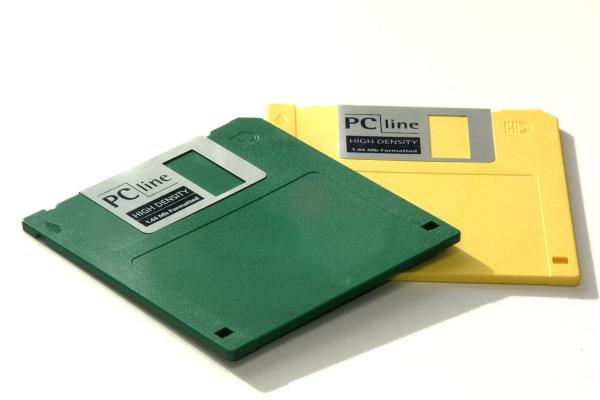 |
| They're not even floppy. |
This is frustrating at times because human beings don't like change. Language can almost never be wrong, even if it diverges from what has been dictated to be the standard, which makes some people go ape-shit.
 |
| I can smell the self-righteousness from here. |
(When "ask" is pronounced like "axe," it's not actually wrong. The pronunciation is different but the meaning is not lost. Pronunciation changes for a lot of reasons, and actually, linguists have studied pronunciation and language change so extensively that they can actually predict how accents in a given region will develop over time. Some call it lazy, some call it evolution. It's whatever.)
When the internet exploded recently over a linguistic misunderstanding between Piers Morgan and author Janet Mock I was caught in a sort of mental paralysis. Words have immeasurable power, and that's scary. Barring what I believe about Piers Morgan, I feel kinda bad, but mostly because I don't understand. I still don't really know how one might talk about someone having been born with biologically male genitalia and who now has biologically female genitalia. I don't even know if the sentence before this one is offensive. I hope not.
The above is literally a video of a bunch of white people talking about the way that everyone should refer to black people. While I definitely don't think a non-black person can appropriate terminology to black people, I can say they do make some really smart discussion about language and culture.
One part of me wishes I could magic away the weight of offensive language so that people wouldn't have to deal with it at all. No one would be offended by words, no one would offend anyone with words, and all the shiny happy people would do the dance of the utopian river goddess and we would, like, play hopscotch on the moon. But another part of me is like, "Nah, it ain't like that." Because people are yucky. Offense language, like vulgarity, is part of our freedom as people to say whatever we want. It leads to colorful and impassioned debate about the human condition and identity and equality. Do I condone the use of offensive language? Nope. (Especially if it's intentional.) Do I think that people should use it? No. But I do think that its existence, however dismal, has a place in the world.
It's interesting how not only language has changed but how we communicate as well. Thanks to the internet we now have "cyber lingo". It's also interesting how this cyber lingo has changed meanings to words and what they mean to different people.
ReplyDeleteI don't know if you're a Harry Potter fan, but I just learned recently that "Draught of the Living Death" is actually pronounced as "draft". Fundamentally changed my childhood; and all over the pronounciation of one word. I think without the diversity of language, even with the meanings and pronounciated of one word in the entirety of a language, it would be boring and constant. The fact that vulgar language evokes an emotional response is what causes change and a political correctness to be established.
ReplyDeletePS- Great post. The last paragraph is my favorite.
Defining language by the speakers and not the language's grammar/mechanics gives it a more fulfilling cultural implication. Very insightful!
ReplyDeleteI liked your discussion surrounding language and culture, language is a refelction of that culture and can often give insight into the worldview of those who participate in it. The only sentence that had me confused was "...definitely don't think a non-black person can appropriate terminology to black people." The "to black people" threw me off and wasn't sure if you meant "of black people" because AAVE (African-American Vernacular English) is specific to African-Americans and is appropriated all the time. I may have just interpreted this sentence wrongly.
ReplyDelete